
Sampling that matches the building
We adjust the sampling plan based on what we see on site, not a one-size checklist. A damp crawlspace, a closet on an exterior wall, and a recently dried ceiling each call for a different approach.
Serving Santa Cruz, California & surrounding areas
24/7 Emergency Response
Mold Testing · Santa Cruz, California
Get clear, documented results when you suspect mold after a leak, flooding, or persistent musty odors. Our inspection and sampling process is designed to pinpoint likely sources and help you decide what to do next.
Know When Testing Helps
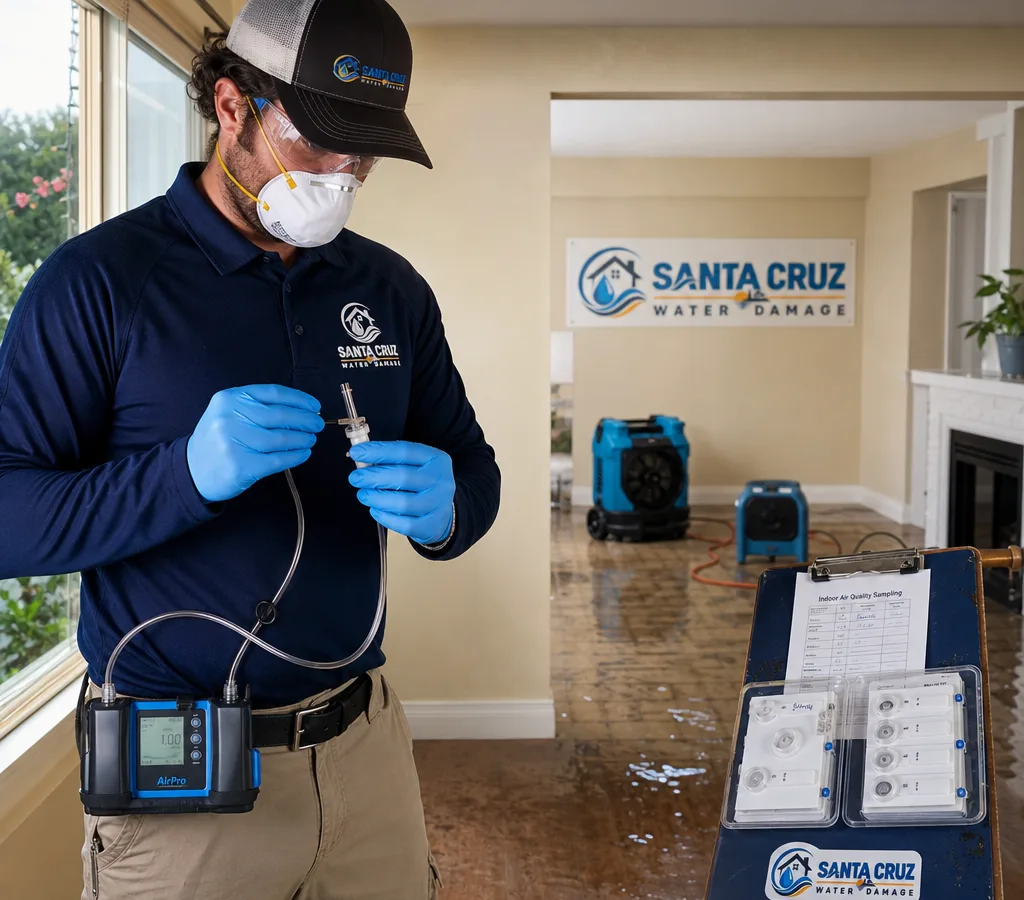
If you are searching for mold testing Santa Cruz homeowners can rely on, you usually have one of three situations: you saw visible growth, you had water intrusion, or you are dealing with odor or health concerns and want objective data.
Testing is most useful when you need a defensible snapshot of what is going on in the air and on surfaces right now. It helps confirm whether conditions are consistent with mold growth, identifies where to focus next, and creates a baseline you can use for landlord discussions, real estate decisions, or post-dryout verification.
In Santa Cruz, testing gets requested often after winter storms, roof leaks, plumbing overflows, or damp crawlspaces. Coastal humidity can keep building materials from drying quickly, and older homes with limited ventilation can hold moisture in wall cavities or under floors longer than people expect.
It is also smart to schedule testing if:
Inspection-Guided Sampling
A proper assessment starts with an on-site inspection. We look for moisture indicators and building conditions that support growth, then recommend sampling that matches the situation. Depending on what we find, mold testing can include:
What testing does not do is replace fixing the moisture problem. Mold follows water. Even the best lab report will not solve the underlying source, so our goal is to pair results with a practical plan you can act on.
If your concern started after a recent leak or flood, it can help to start with a documented dryout and moisture verification first. Many clients come to us after working with Santa Cruz Water Damage to get the property stable and then confirm what, if anything, is left to address.
Useful Results, Careful Work
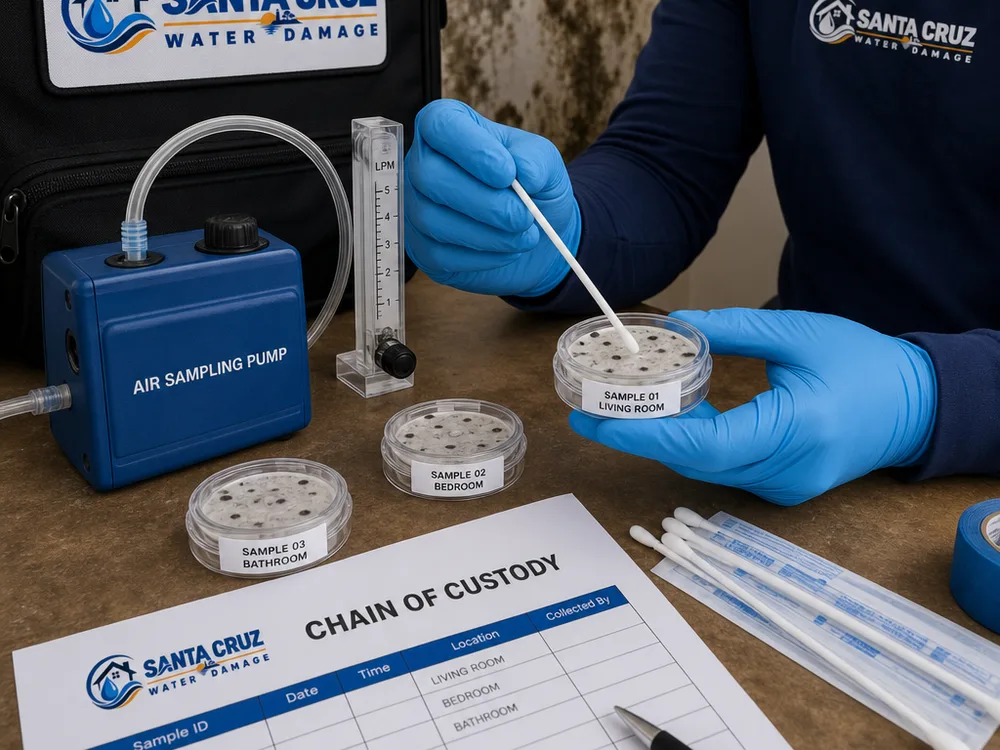
We adjust the sampling plan based on what we see on site, not a one-size checklist. A damp crawlspace, a closet on an exterior wall, and a recently dried ceiling each call for a different approach.
You get a written summary of observations, sampling locations, lab findings, and straightforward next steps so you can make decisions without guessing.
Mold concerns often start right after a water event or before a move-in. We prioritize quick turnaround for inspections and sampling whenever the schedule allows.
We treat your space like a lived-in home: clean setup, clear communication, and minimal disruption while we collect what we need.
We help you understand what the results mean in plain language and what questions to ask if remediation is needed.
Inspection to Results
Every sample is selected to answer a defined question, document the property’s condition, and support practical next steps.
We start with the story: when the issue began, any known leaks, what areas smell or look suspicious, and whether the goal is health reassurance, a real estate decision, or documentation after a water event.
We check the areas you are worried about and the adjacent building components that often hide moisture, such as baseboards, closets on exterior walls, under sinks, and around windows.
We select air and/or surface sampling locations based on the inspection. When air sampling is used, we aim for meaningful comparisons rather than collecting random samples that do not answer your question.
Samples go to an accredited lab for analysis. Your report documents where samples were collected and presents results in a way that supports next-step decisions.
We walk you through what the report means and what to do next: moisture correction, selective demolition, containment-based remediation, or retesting if conditions change.
Testing Costs
Mold testing in Santa Cruz typically ranges from about $350 to $950+, depending on the number of samples and the size and complexity of the property. A basic inspection with 1 to 2 samples is usually at the lower end, while larger homes, multi-unit properties, or cases needing multiple indoor locations and surface sampling run higher.
Your final price depends mainly on sample count, access to attics or crawlspaces, whether you need same-day scheduling, and whether the goal is a general assessment or documentation tied to a specific incident. Exact cost is confirmed after the on-site inspection and the sampling plan is set.
Turn Lab Findings Into a Plan
A good mold report should answer practical questions, not just list organisms.
What you should be able to take from the results:
If remediation is recommended, use the report to ask contractors specific questions about containment, negative air, source removal, and post-remediation verification. If you are not doing remediation, the report still helps by identifying where to focus moisture control and cleaning.
For many Santa Cruz homes, crawlspaces and exterior-wall closets can be the difference between an occasional odor and a repeat problem. Testing does not replace fixing ventilation or drainage issues, but it can show you where those efforts will matter most.
Customer Proof
“We had a musty smell that kept coming back after a small leak. The inspection was thorough and the sampling locations made sense. The report was easy to understand and helped us focus on the actual source instead of tearing out random drywall.
“As a landlord, I needed documentation and a clear plan. The testing was scheduled quickly, and the results review gave me a straightforward list of next steps and what to monitor.
Answers Before Sampling
Scheduling depends on current demand, but inspections and sampling are often available within a few days, and sometimes sooner for urgent situations after water intrusion. If you are on a real estate timeline or the property is occupied and symptoms are escalating, mention that during intake so we can prioritize appropriately.
Keep the home in normal living condition for the most meaningful snapshot, and avoid unusual actions right before sampling. Strong ventilation, heavy cleaning, or running high-output air scrubbers can temporarily change airborne levels and make results harder to interpret. If there is an active leak or obvious wet materials, address safety first and let us know so the sampling plan accounts for it.
Neither is universally better; it depends on the question you need answered. Air samples help compare indoor conditions room to room and against a comparison sample, while surface samples confirm whether a specific spot is mold and can help document localized growth. Many investigations use a combination when there is both visible suspect material and an indoor air concern.
You can often gather strong evidence with inspection, moisture checks, and targeted air or surface sampling, but you cannot directly sample inside a sealed cavity without an access point. If the inspection suggests concealed moisture, we will explain reasonable options, including selective openings in the least disruptive locations.
Testing before remediation is most useful when the extent is unclear, when documentation matters, or when you need to avoid unnecessary removal. If there is clearly visible mold growth on water-damaged materials, many situations call for direct corrective action and moisture correction first, with testing used for documentation or post-remediation verification.
Yes. You receive a written report with sampling locations, lab findings, and observations from the inspection so the next decision maker can understand what was tested and why. If you are gathering documentation after a specific incident date, tell us during intake so we can structure the report to match that need.
Schedule Mold Testing
Tell us what you are seeing or smelling and when it started. Santa Cruz Water Damage can schedule an on-site mold inspection and sampling plan that fits your situation, then provide a report you can use to decide the next step with confidence.