
Containment first
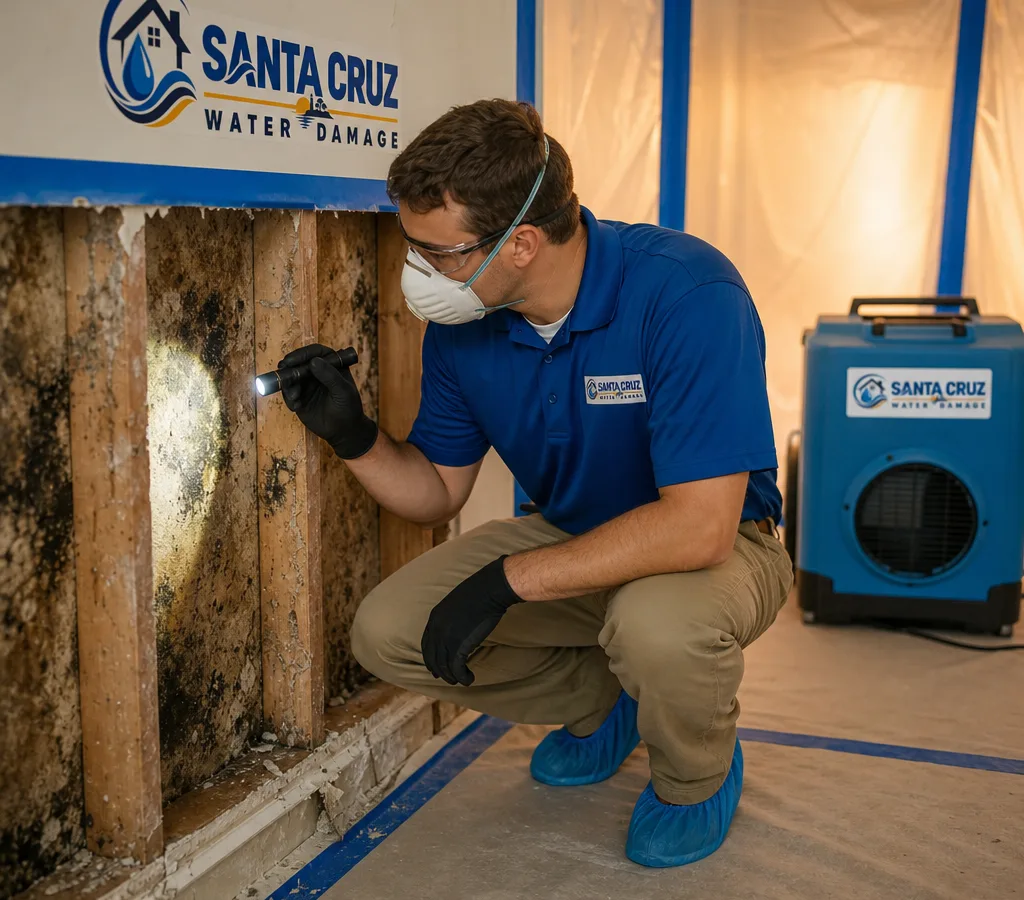
We isolate the work area with plastic sheeting and control airflow so disturbed spores do not spread into living spaces, closets, or adjacent rooms.
Serving Santa Cruz, California & surrounding areas
24/7 Emergency Response
Mold Removal · Santa Cruz, California
Get a clear plan to stop the growth, remove contaminated materials safely, and return your home to clean, dry conditions with documentation you can use for landlords or insurance.
Moisture Control Comes First
If you are searching for mold removal Santa Cruz CA, you are probably dealing with one of two problems: a musty smell that will not go away, or visible growth that keeps coming back after cleaning. In Santa Cruz, moisture can linger in coastal air and shaded areas of a home, so the real fix is rarely a wipe-down. Professional mold remediation focuses on controlling moisture, removing contaminated material when needed, and cleaning the air and surfaces so spores are not left behind.
Santa Cruz Water Damage handles mold removal and remediation for houses, condos, and rental units across Santa Cruz. We inspect, define the affected area, establish containment, remove or clean materials as appropriate, and verify conditions before closing the work area. If a leak or recent flood is involved, a coordinated water damage restoration plan helps ensure the moisture source is handled before remediation is finished.
Controlled Remediation
We isolate the work area with plastic sheeting and control airflow so disturbed spores do not spread into living spaces, closets, or adjacent rooms.
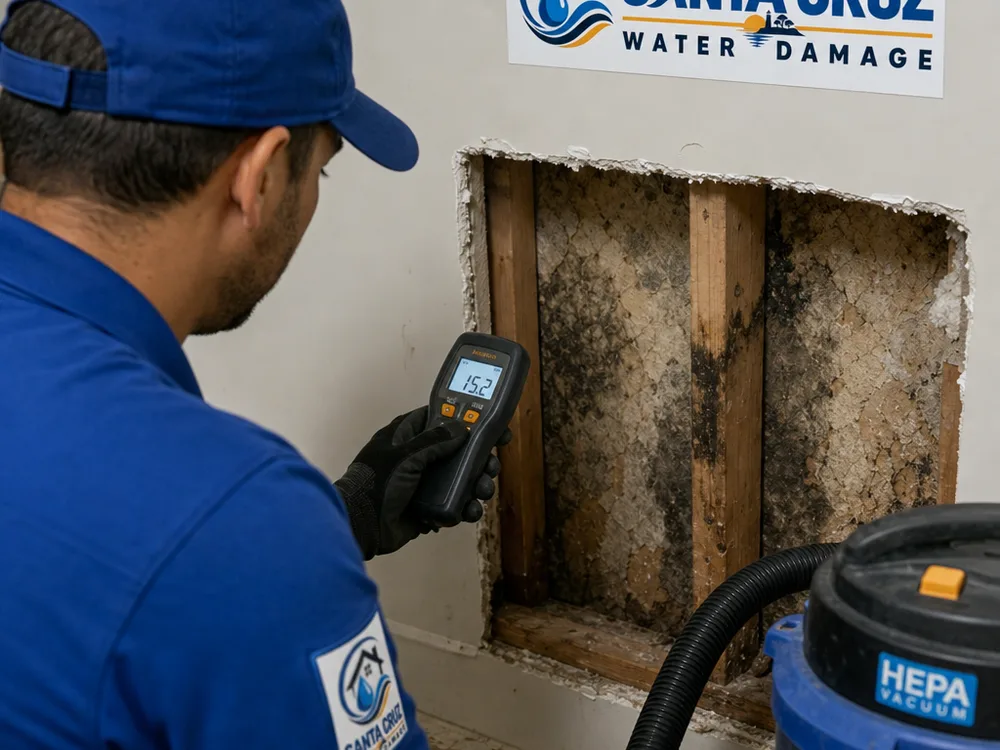
HEPA air scrubbers and HEPA vacuums capture fine particles during demolition and cleaning, which is essential when mold is present behind drywall or under flooring.
Some surfaces can be cleaned and treated; others should be removed and replaced. We base that call on material type, contamination depth, and how long moisture has been present.
Recurring mold usually means recurring moisture. We look for plumbing leaks, roof or window intrusion, wet crawlspaces, and ventilation issues that keep humidity high.
You get a written scope of work and photo documentation so you know what was found, what was removed, and what was done to reduce the chance of regrowth.
We plan containment, access, and cleanup so you can keep the rest of the home usable when it is safe to do so, especially in small homes and multi-unit buildings.
Hidden Moisture Pathways
Mold problems in Santa Cruz often show up where moisture stays trapped or airflow is poor. Older homes, additions built at different times, and cool, shaded spaces can create condensation points. In beach-adjacent areas like Seabright and along West Cliff, marine moisture can keep surfaces damp longer, so a small plumbing leak can become a larger cleanup when it remains unnoticed.
We commonly find contamination in:
In neighborhoods with a mix of older and remodeled housing, including Pleasure Point and the lower avenues, multiple materials may be layered over time. Opening the correct areas during inspection helps prevent mold from being sealed behind new finishes.
Inspection to Final Cleanup
Each stage is designed to control spread, address contaminated materials, and leave a documented path toward repair.
We look for visible growth, water staining, musty odors, and likely pathways for moisture. Nearby materials are checked to understand how far the issue may extend beyond what is visible.
We outline the affected area, protect floors and contents, and build containment where needed. Air filtration helps keep the work area controlled during removal and cleaning.
When drywall, insulation, baseboards, or flooring are contaminated beyond practical cleaning, debris is removed and bagged carefully to reduce cross-contamination.
We clean remaining structural materials and surfaces, HEPA vacuum fine particles, and apply appropriate antimicrobial treatments when they fit the situation.
When materials remain damp, targeted drying and monitoring are used. Drying is part of mold control because mold can return when moisture returns.
We complete a detailed clean, remove containment when safe, and provide documentation of what was addressed. If repairs remain, we explain the next steps for planning the rebuild.
Written Scope Before Work
Mold removal in Santa Cruz typically ranges from about $900 to $3,500 for smaller, contained areas, while larger multi-room or crawlspace projects often run $4,000 to $12,000+.
Cost depends on how many square feet are affected, how much demolition is required for drywall, insulation, or flooring, site access such as tight crawlspaces or high ceilings, the level of containment needed, and whether active drying is part of the job. Exact pricing is confirmed after an on-site inspection and written scope.
Customer Proof
“We had a musty smell that kept coming back after we cleaned the bathroom ourselves. The inspection showed moisture behind the wall by the shower valve. They contained the area, removed the damaged drywall, and cleaned everything properly. The house finally smells normal again.
“Our tenant reported a leak under the kitchen sink, and we were worried about mold spreading into the cabinets. The crew explained what had to be removed versus what could be cleaned, and the documentation made the next steps straightforward.
Clear Answers Before Remediation
Most mold jobs can begin quickly once the affected area is inspected and the scope is confirmed, especially when active moisture is present. Timing depends on containment requirements and whether demolition and drying equipment must be staged, but the goal is to stop spread and bring humidity under control as soon as practical.
Testing is not always required when visible growth and moisture damage are present because the work plan is driven by on-site conditions. If lab results are needed for a landlord, real estate file, or clearance plan, options can be discussed during the inspection and coordinated around those documentation needs.
Often, yes, when the affected area can be fully contained and the work is limited to a specific room or section. If mold is extensive, involves HVAC pathways, or affects bedrooms or primary living areas, it may be safer to limit occupancy during portions of the work. We explain what is realistic for your layout and timeline.
Regrowth usually means moisture was never fully addressed or contamination extends into porous materials such as drywall, insulation, or subflooring. Santa Cruz humidity and coastal moisture can slow drying, allowing small leaks, wet crawlspaces, or poor bathroom ventilation to keep materials damp enough for mold to return.
Bleach can lighten staining on some hard, non-porous surfaces, but it does not resolve mold inside porous materials or behind finishes, and it does not correct the moisture problem. Professional remediation centers on containment, appropriate material removal, HEPA cleaning, and moisture control.
When drywall or insulation is contaminated or has remained wet long enough that it cannot be reliably cleaned and dried, removal is usually part of remediation. We document what is removed and why so the rebuild can restore the area without trapping contamination behind new materials.
We isolate the work zone with containment barriers, control airflow, and use HEPA filtration during removal and cleaning. This is especially important in smaller Santa Cruz homes and multi-unit buildings where air movement can carry particles into adjacent spaces.
Plan the Cleanup
Describe what you are seeing and where it is happening, and we will schedule an inspection to confirm the source of moisture, define the affected area, and provide a clear scope for mold remediation in Santa Cruz.