
Clear containment strategy
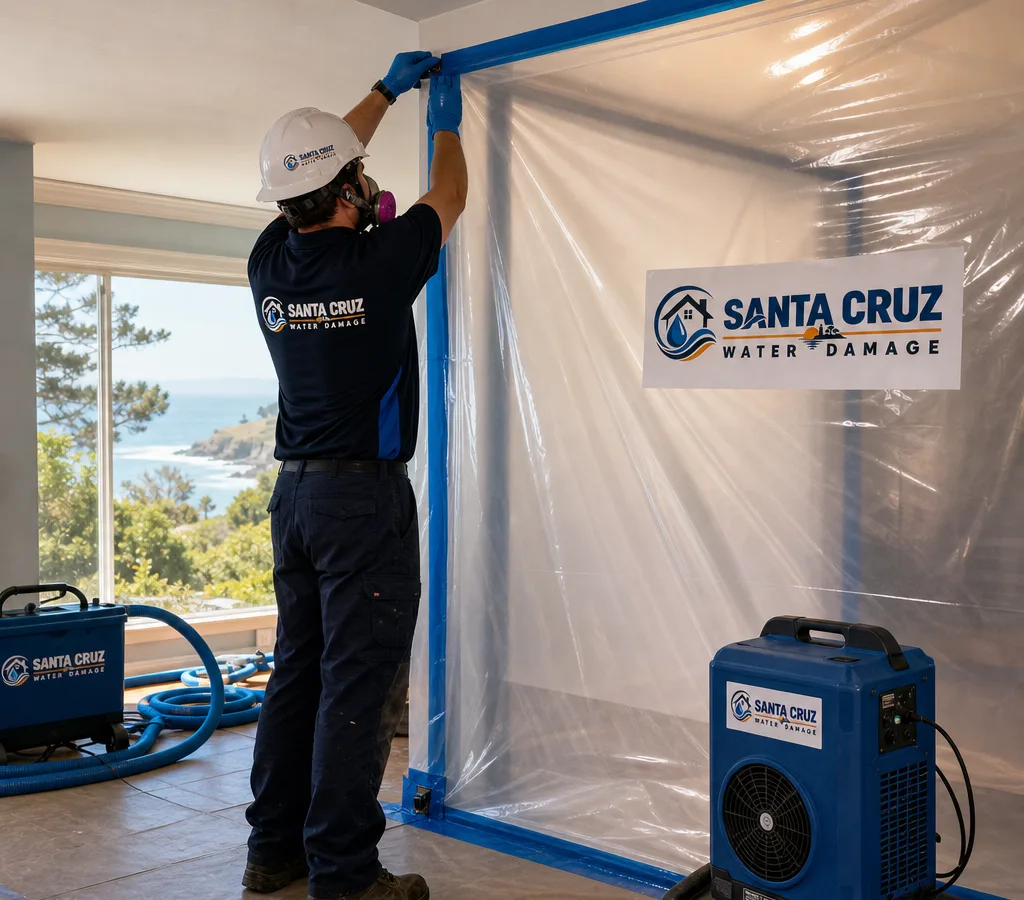
We isolate the affected area with plastic sheeting and maintain negative air pressure so disturbed spores are pulled through filtration rather than drifting through the home.
Serving Santa Cruz, California & surrounding areas
24/7 Emergency Response
Mold Remediation · Santa Cruz, California
If you smell a musty odor, see staining, or had recent water damage, our certified team contains the affected area, removes contaminated materials safely, and leaves you with a clear plan to keep mold from coming back.
Containment, Removal and Moisture Control
When people search for mold remediation Santa Cruz, they usually want two things: the growth removed safely and the reason it showed up addressed so it does not return. Mold often follows moisture from plumbing leaks, roof intrusions, damp crawlspaces, or lingering humidity after a storm or overflow.
Our process focuses on doing the work the way it should be done in occupied homes: careful containment, controlled removal, and cleanup that limits cross-contamination. If you are dealing with a recent leak or flood, coordinating mold work with drying and moisture control matters. Many clients start by stabilizing the moisture event first through water damage restoration so the remediation is not chasing an active source.
We work throughout Santa Cruz, including coastal neighborhoods where salt air and frequent fog can keep materials damp longer, and hillside areas where runoff and older drainage can introduce moisture into garages, lower levels, and crawlspaces. The plan is always based on what we find on site, not a one-size checklist.
Professional Remediation Standards
We isolate the affected area with plastic sheeting and maintain negative air pressure so disturbed spores are pulled through filtration rather than drifting through the home.
Mold remediation is not just wiping visible spots. We look for the moisture pathway—leaks, condensation, damp framing, or crawlspace humidity—and build the scope around it.
Porous materials that cannot be reliably cleaned—often drywall, insulation, and some baseboards—are removed and disposed of properly to stop regrowth.
After removal, we HEPA vacuum and detail-clean nearby surfaces and contents as appropriate, then wipe down with remediation-grade cleaners based on the material type.
We monitor moisture in building materials and confirm drying targets before containment comes down, because closing up damp assemblies is a common reason mold returns.
You receive a straightforward summary of what was found, what was removed, and what conditions need to stay controlled going forward.
Controlled Removal and Cleaning
Mold remediation is controlled demolition and cleaning, not a fragrance spray or a quick paint-over. The goal is to physically remove mold growth and contaminated dust while preventing spread to clean areas.
A typical professional setup includes:
In Santa Cruz, we often see mold in bathrooms with limited ventilation, behind cabinets after slow supply-line leaks, under sinks, around windows where condensation is common, and in crawlspaces where moisture stays trapped. Remediation may involve removing sections of drywall or subfloor to reach the affected framing, followed by HEPA sanding or wire-brushing when appropriate, then cleaning and drying.
If testing is part of your decision, we can coordinate around third-party sampling so the results stay impartial. Many clients skip testing when growth is visible and the scope is straightforward; in other cases—ongoing odor, unclear boundaries, health concerns, or a real estate timeline—testing can help define next steps.
From Inspection to Closeout
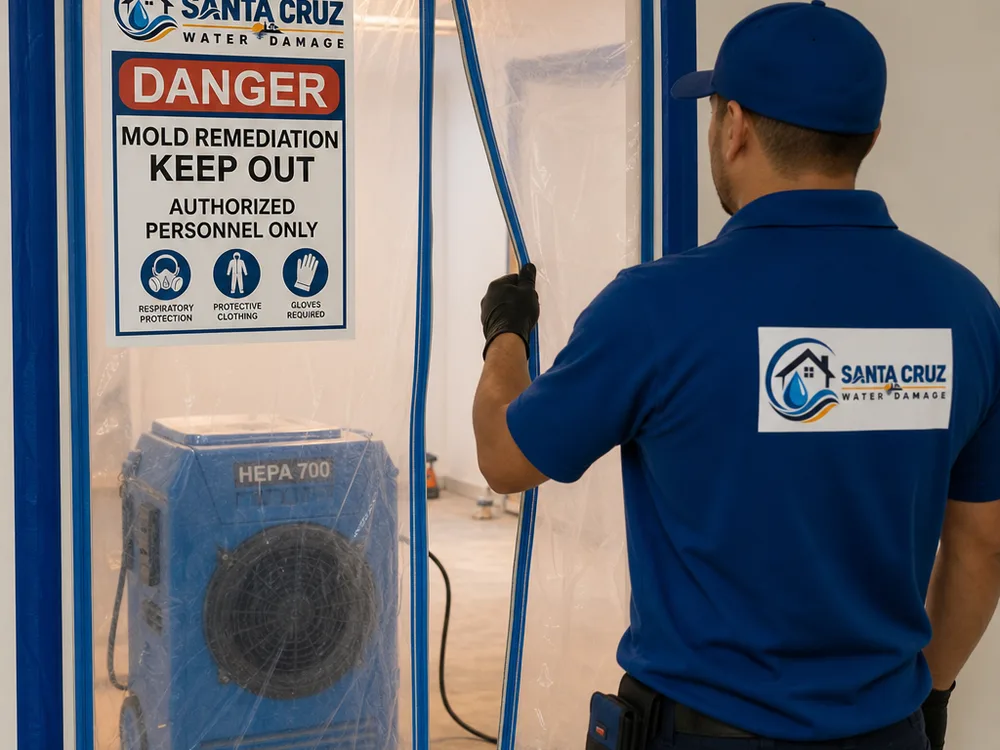
Each phase protects clean areas, addresses affected materials, and confirms the space is ready for the next step.
We start by identifying where mold is active or suspected, then check for moisture conditions that support growth. The outcome is a written scope: what areas are included, what materials are likely affected, and how we plan to contain the work.
Before disturbing materials, we isolate the work area and set up HEPA-filtered negative air as needed. This is the step that keeps spores from spreading into hallways, bedrooms, and HVAC returns.
We remove unsalvageable porous materials, clean remaining structural components, HEPA vacuum, and detail-clean surrounding surfaces and affected contents based on what can be safely treated.
We verify the area is dry enough to close up, then review practical prevention items including ventilation, leak repair coordination, crawlspace moisture control, and cleaning habits. If reconstruction is needed, we outline what should be rebuilt and what should stay accessible for future monitoring.
Clear Residential Pricing
Mold remediation in Santa Cruz typically ranges from about $1,500 to $6,500 for many residential projects, with small, contained areas sometimes closer to $800 to $1,500 and larger or multi-room remediation running $7,500 to $15,000+ when removal, containment complexity, and drying needs increase.
Price depends most on the size of the affected area, which materials must be removed—drywall, insulation, or flooring—access such as an attic or tight crawlspace, required containment level, and whether active moisture is still present. The exact cost is confirmed after an on-site inspection and written scope.
Customer Proof
“We had a musty smell that got worse after the rains. The team set up containment, removed the damaged drywall behind the vanity, and cleaned everything without spreading dust through the house. The explanation of what caused it and how to keep it dry was the most helpful part.
“They were straightforward about what needed to come out and what could be cleaned. The work area stayed sealed, and the rest of the home stayed livable while they finished the remediation.
Clear Answers Before Work Begins
The right time to start is as soon as the moisture source is stopped and drying is underway, because mold can spread while materials stay damp. If the leak just happened, we prioritize stabilization first, then schedule containment and removal once we can confirm the area is not actively getting wet.
If mold is on or inside drywall, removal is often the correct approach because gypsum and paper facing are porous and hard to clean reliably. We only remove what is necessary to reach and treat affected framing and to prevent concealed growth from remaining behind finished surfaces.
Often yes, if the work area can be fully contained and there is a clear path for workers and debris, but it depends on where the mold is and who lives in the home. Households with asthma, immune concerns, or very young children may prefer to avoid the work zone entirely or temporarily relocate; we will talk through realistic options during the inspection.
Bleach may lighten staining but it is not a dependable remediation method for porous materials like wood because it does not consistently penetrate to where growth can live. Professional remediation relies on physical removal—scrubbing and HEPA abrasion where appropriate—HEPA dust control, and drying the material to conditions that do not support regrowth.
Not always; visible growth with a clear moisture cause can often be remediated based on an inspection and a defined scope. Testing can be useful when the affected area is unclear, the concern is an ongoing odor without visible growth, or you need documentation for a real estate or insurance process, and we can coordinate around an independent tester if you choose that route.
Mold usually returns when moisture is still present or when contaminated dust spreads beyond the work area. The most common pitfalls are skipping proper containment, closing walls before materials are dry, ignoring a slow leak or condensation issue, and leaving a damp crawlspace or bathroom ventilation problem unresolved.
Inspect Before Disturbing Materials
Tell us what you are seeing and where you suspect the moisture started. Santa Cruz Water Damage will inspect the area, explain the containment plan, and provide a written scope so you can move forward with confidence.